 VASIONA
Customer portal and operations platform
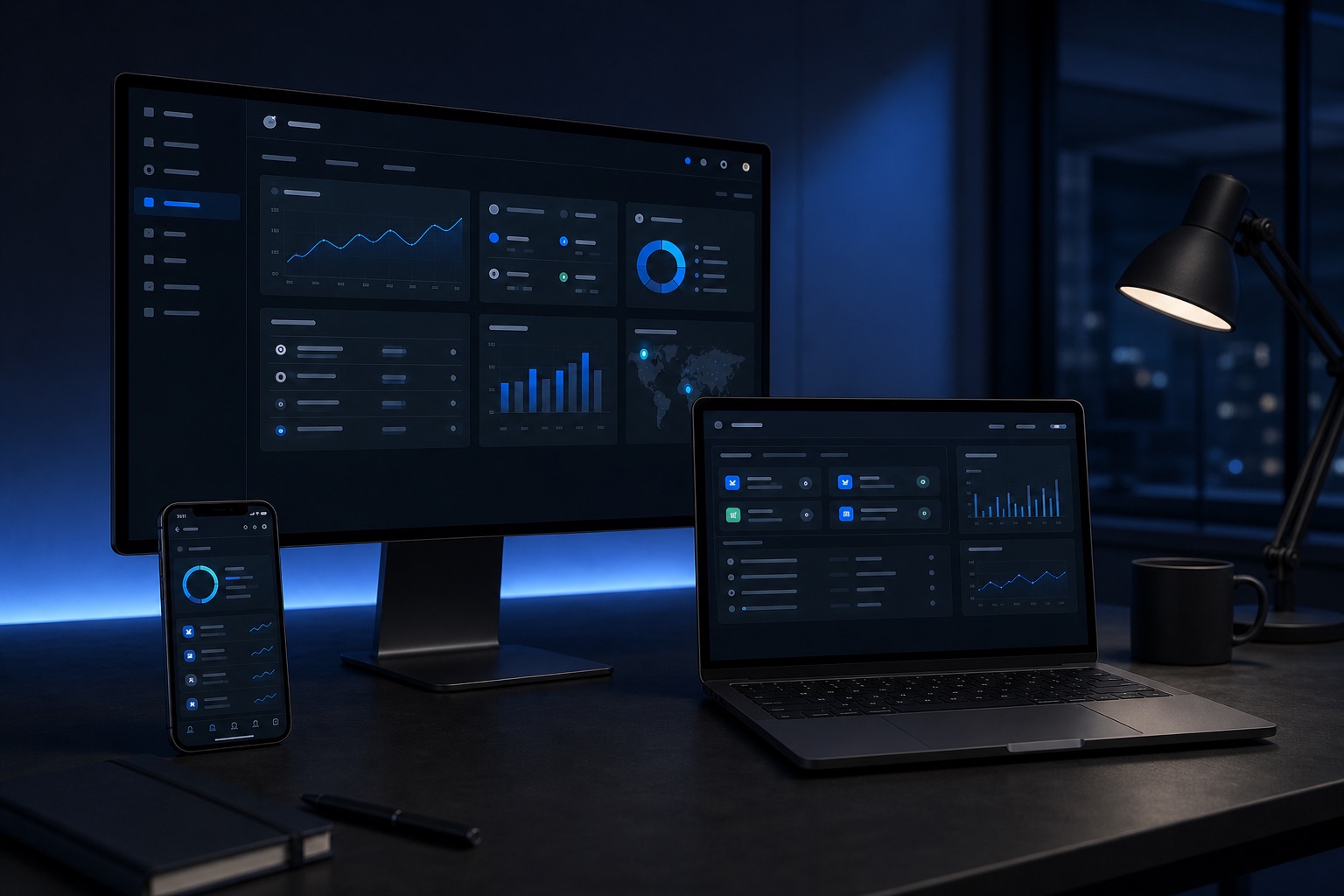
Customers track requests, documents, appointments, and status while the internal team manages processing, approvals, and communication in the same system.
System 04 / 04
When a standard tool cannot support the process that differentiates you, we build software around real users and operations. From a business website and mobile app to a SaaS product, portal, or multi-location platform, every decision ties back to a measurable business objective.
Companies whose specific process is a competitive advantage
Teams running critical operations through spreadsheets, email, and manual copying
Founders turning a validated service or process into a digital product
Organizations whose current product no longer supports new users, locations, or integrations
Customers track requests, documents, appointments, and status while the internal team manages processing, approvals, and communication in the same system.
We build a complete product with registration, billing, roles, analytics, and a mobile experience, focused on the smallest scope that can be used and tested for real.
Documents, data, and repetitive work enter one workflow. AI search, extraction, or assistants help where quality criteria and human control are explicit.
Fast, accessible websites and conversion-focused landing pages connected to analytics, CRM, and marketing channels.
Scalable web applications, booking platforms, marketplaces, and multi-location products for real operational workflows.
Native and cross-platform mobile apps with clear user experience, secure data, and a reliable backend.
Customer and employee portals, operational tools, and dashboards that bring work, data, and approvals together.
Purpose-built data models, third-party integrations, document processing, and API layers that connect the whole system.
AI search, assistants, data extraction, and other capabilities embedded directly where they create clear value.
Work begins by mapping users, workflows, data, and the systems you already have. Together, we define the smallest complete product, architecture, and delivery plan instead of starting with a long unprioritized feature list.
Development moves in short cycles with working releases and real-world scenario testing. We build documented APIs, reliable integrations, and a foundation that can grow, adding AI features only where they materially improve the experience or operations.
A product shaped around your process, users, and business model
A stable architecture ready for more features, locations, data, and integrations
A clean, documented system your team can continue to evolve
We map users, jobs, business rules, existing systems, and the measurable goal of the first release.
Before full development, we validate key flows and decide architecture, data, integrations, and risk controls.
Delivery moves in short cycles with demonstrations and testing, allowing priorities to adapt to real learning.
After launch, we monitor performance and user behavior, resolve issues, and prioritize the next capabilities by value.
Architecture, access rules, and data processing are defined before critical implementation choices
Automated tests and staging protect key user journeys
Monitoring, logs, and alerts help the team detect issues before users do
Documented APIs, technical decisions, and code leave a maintainable foundation for future development
When your process creates unique value, a standard tool forces constant compromises, or work depends on manual handoffs between systems, a custom product can be a justified investment.
No. We define the smallest complete version that solves a real problem, can be used, and creates enough evidence for the next decision.
Yes. We begin with a technical and product review, then recommend iterative modernization, selective extraction, or a controlled replacement.
We can continue with monitoring, maintenance, optimization, and new capability development on an agreed priority and delivery cadence.
The Revenue Systems Audit maps your current process, points of loss, and the next step with clear scope and priorities.